


LEAK SEAL PIPE REPAIR FAQS
If we haven't answered your question below, please get in touch and we will be happy to help.
INDUSTRIAL-GRADE, NO TRAINING NEEDED
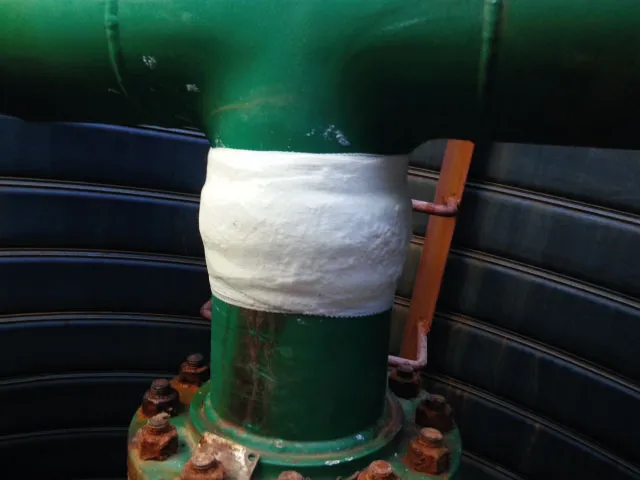
PipeWrap offers a comprehensive range of industrial leak seal products designed to permanently fix a burst pipe or leaking seal in less than 30 minutes. All of that without the need for formal training.
Our systems are made for fast pipe leak repair on a range of materials and diameters, making them ideal for on-site maintenance teams working in live environments.
Works Under Pressure:
No need to stop the flow or depressurise the line. Our pipe repairs are engineered for active, live leak conditions.
Permanent Repairs
We know that temporary patches aren't enough. Our systems deliver a long-term leak seal that reinforces pipeline integrity.
Cost-Effective
A practical alternative to full pipeline replacement, offering a durable solution for burst pipe issues.
MinimiSed Downtime
Repairs can be completed in under 30 minutes, reducing stoppages and unplanned shutdowns.
Most PipeWrap products hold WRAS and/or NSF61 approvals, making them suitable for potable water applications where a leaking seal must be repaired safely and compliantly.
Water Utilities & Public Infrastructure
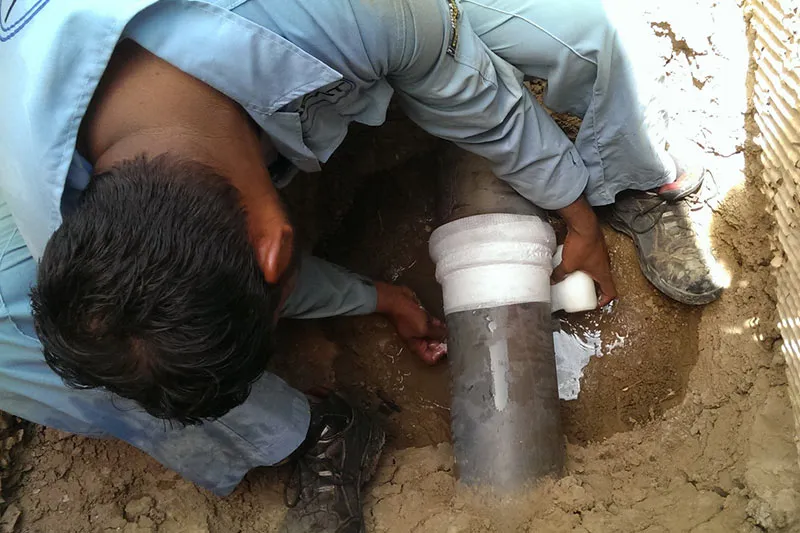
The majority of water mains across the world are extensive and it is impossible to avoid leaks and bursts from time to time. That is why having a reliable Leak Seal System ready to go when an emergency strikes is essential, so as not to disrupt the city or district that the pipe serves.
Industrial Pipework
In the world of manufacturing, downtime can cost thousands for every minute a line is down. Especially in a plant that has been running for decades, with old and hybrid equipment, engineers may not have the right parts to carry out the repairs needed. To avoid the lead time needed after ordering the new parts, you can rely on us to provide a quick and easy solution across a range of piping.
Wastewater Treatment
A leak in wastewater management can very quickly become a biohazard and put employees' or the public's health at risk. This is why having a quick and effective solution to fall back on is essential to maintaining environmental compliance.
Plus Many More Practical Applications
Our leak sealing products can be purchased individually or as part of a complete pipe repair kit. Each kit includes a UPS EMERGENCY PIPE REPAIR BANDAGE, which, when applied over the initial sealing material, creates a reinforced outer layer for permanent restoration.
PipeWrap delivers long-term value by extending service life and reducing costly unplanned outages. A leak seal repair is often completed at a fraction of the cost of full replacement.
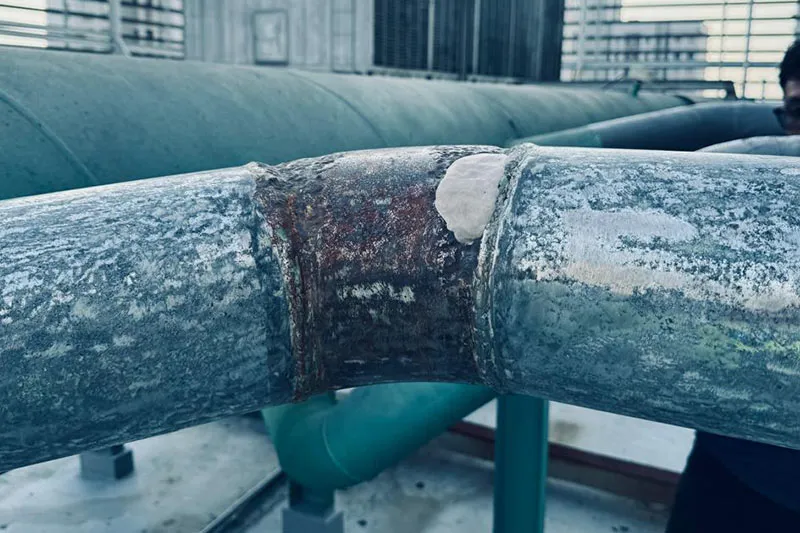

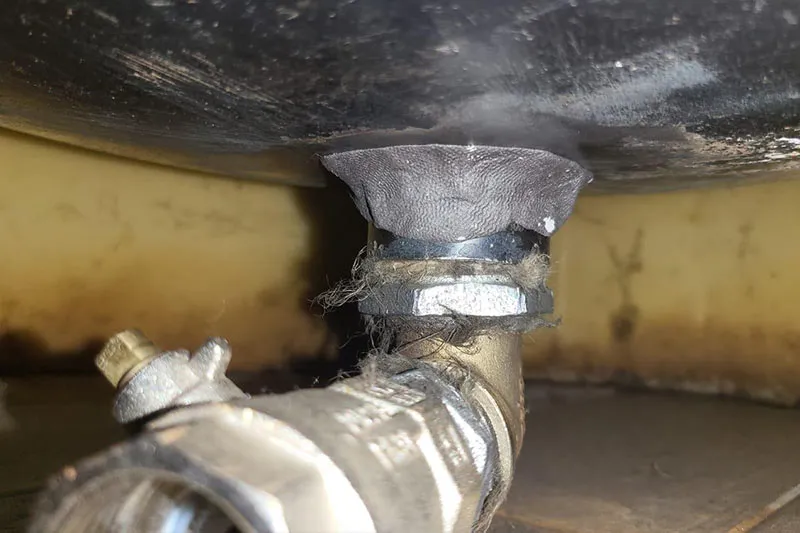
The maximum service temperature for the Leak Sealing application varies depending on the products used, each with its own temperature resistance. The overall maximum service temperature will be determined by the lowest temperature resistance among the products employed.
For instance, the UPS ASME EMERGENCY PIPE REPAIR BANDAGE has a temperature resistance of 250°C, while the UPS THISTLEBOND STICK GRADE METAL has a continuous temperature resistance of 120°C. When used together, the maximum temperature resistance of the leak sealing system is limited to 120°C, determined by the component with the lowest temperature rating. If you have any questions or need clarification, please contact PipeWrap for technical support.
For more information or to find a distributor near you, please contact PipeWrap.
CONTACT USMake pipeline repair planning easier with the PipeWrap Restoration Calculator — a smart, user-friendly tool that helps you choose the right products for every stage of the PipeWrap Restoration System. Use it while browsing this page to ensure accurate calculations and efficient, tailored solutions for your pipeline protection needs.
View calculatorIf we haven't answered your question below, please get in touch and we will be happy to help.